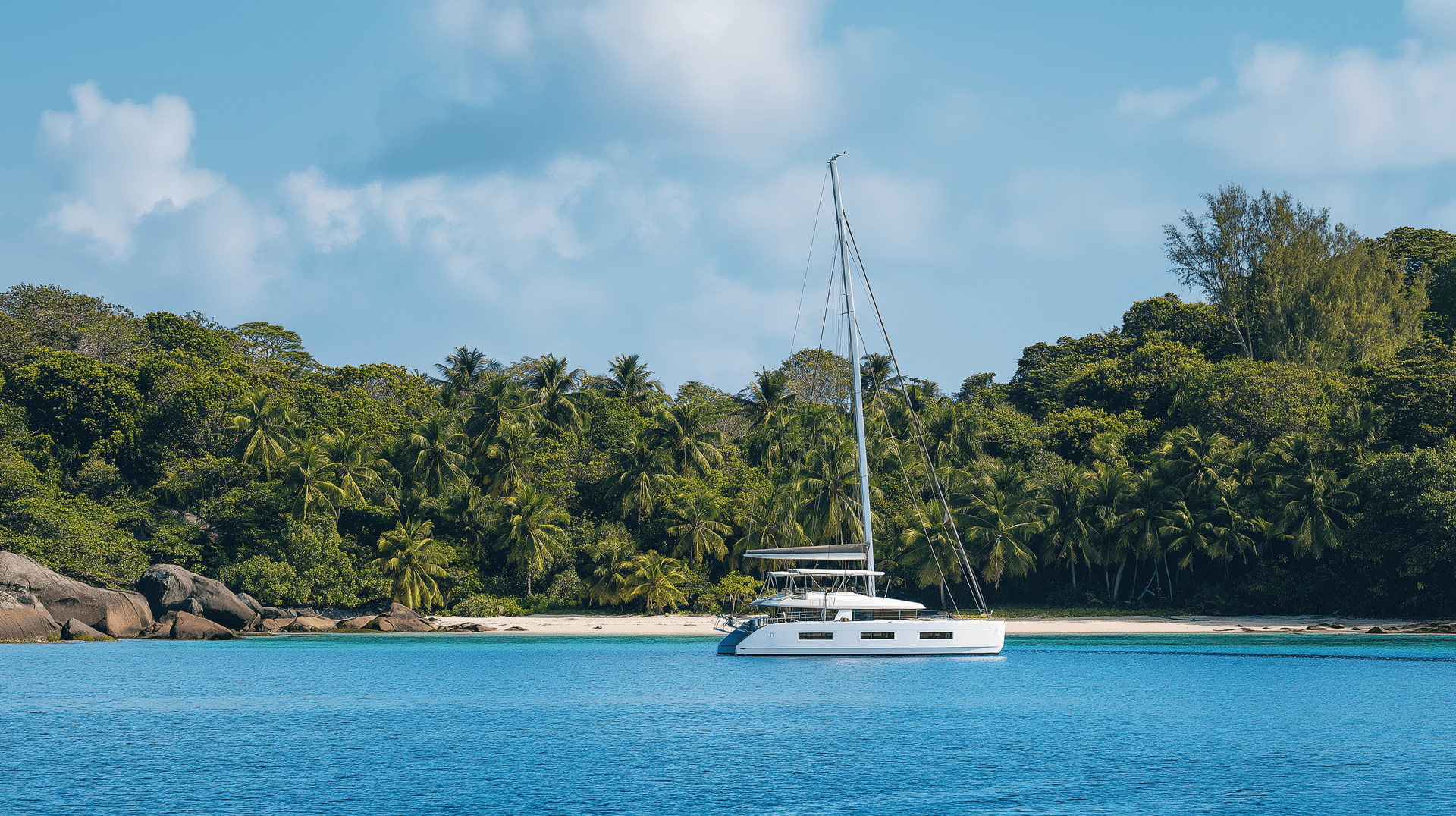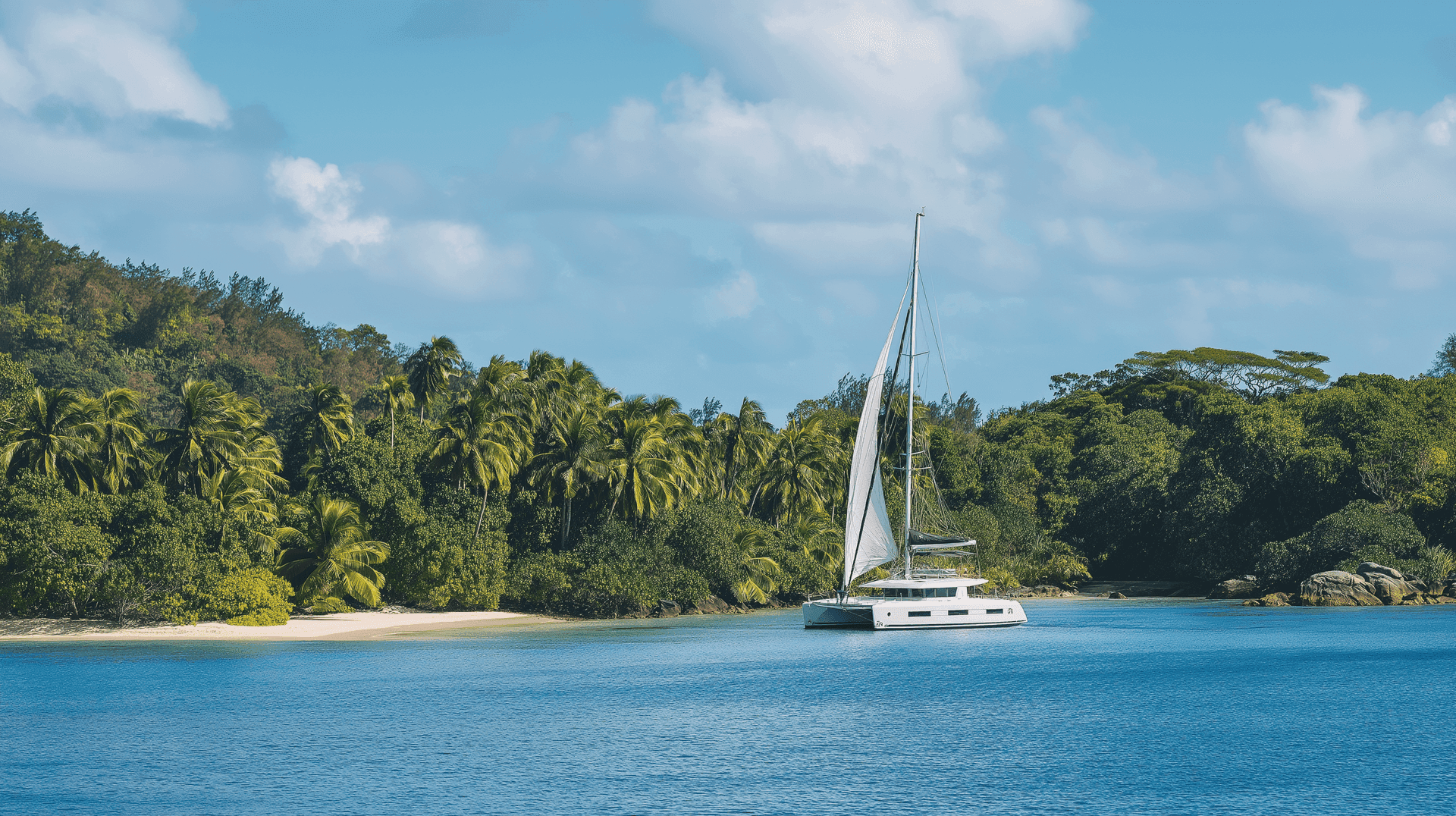
A brokerage listing answers "how much does a yacht cost" with the acquisition price. That number is a single event. Everything after it recurs annually, in cash, for as long as the vessel is owned.
The Wrong Number Answers the Question
The question "how much does a yacht cost" is almost always answered with the wrong number. Brokerage listings publish the acquisition price, buyers finance against it, and the entire industry's marketing apparatus is organised around it.
The purchase price is a single event. Everything after it recurs annually, in cash, for as long as the vessel is owned, and in most cases the cumulative operating cost overtakes the purchase price well before the owner sells.
That inversion is the whole subject of this series. A buyer who underwrites the acquisition carefully and the operating stack loosely has underwritten the smaller number carefully.
Where the Ten Per Cent Rule Comes From
The folk rule circulating in every brokerage blog is that annual running costs come to ten to fifteen per cent of purchase price. That rule cannot be traced to any surveying body, owners' association or insurer.
The ten to fifteen per cent figure appears in commercial content, is repeated between commercial content sites, and has no identifiable origin. Repetition is not provenance.
What can be sourced is a narrower claim, and it is not the same claim. Boat Trader, part of Boats Group, advises owners to budget roughly ten per cent of a boat's value annually on routine maintenance alone, which on a $50,000 boat is about $5,000 a year.1
Routine maintenance is one line in an operating budget. Boat Trader does not present it as the total, and reading it as the total is where the rule of thumb goes wrong.
What the Published Budget Actually Says
The same Boat Trader guide publishes a full sample annual budget for that $50,000 boat, and the arithmetic on their own table is more revealing than the rule of thumb it sits beside.1
| Cost line | Low case | High case |
|---|---|---|
| Insurance | $500 | $1,000 |
| Storage and mooring | $2,000 | $10,000 |
| Routine maintenance | $5,000 | $5,000 |
| Fuel | $2,000 | $10,000 |
| Dockage | $500 | $1,000 |
| Supplies | $300 | $800 |
| Memberships | $149 | $1,000 |
| Total | $10,449 | $28,800 |
Summed, the published budget is $10,449 at the low end and $28,800 at the high end. Expressed against the purchase price, that implies annual running costs of twenty-one to fifty-eight per cent, not ten to fifteen.
The gap between the rule of thumb and the same publisher's own table is the single most useful number a prospective owner can hold.
Two Lines Cause Most of the Spread
The published budget spans $18,351 between its low and high case, and two lines account for almost all of it.
Storage and mooring runs $2,000 to $10,000, a swing of $8,000. Fuel runs $2,000 to $10,000, another $8,000. Together those two lines supply $16,000 of the $18,351 spread, roughly eighty-seven per cent of it.1
Every other line is comparatively stable. Insurance moves by $500, dockage by $500, supplies by $500 and memberships by $851. Routine maintenance does not move at all in the published table, because Boat Trader gives it as a single figure rather than a range.
The practical reading is that a prospective owner who pins down berthing and fuel has pinned down most of the uncertainty in the budget. Both are answerable in advance: berthing from a published marina tariff, fuel from an honest estimate of how far the vessel will actually move.
The Reserve Sits Outside the Budget
Boat Trader's sample budget excludes an emergency reserve, which the same guide recommends holding separately at ten to twenty per cent of hull value.1
On the $50,000 boat, a reserve at that rate is $5,000 to $10,000 held against unscheduled failure. It is capital set aside rather than money spent, but it is capital that cannot be doing anything else.
Treating the reserve as optional is the most common budgeting error in first-time ownership, because the events it covers are exactly the events that arrive without warning: a failed gearbox, a lightning strike, a haul-out that finds osmosis.
An owner without a reserve does not avoid the cost. The owner defers it, usually into a season when the vessel cannot be used.
When Operating Cost Overtakes the Purchase Price
The claim that cumulative operating cost overtakes the purchase price is arithmetic on the published budget rather than a rhetorical flourish.
At the low case of $10,449 a year, a $50,000 boat costs $73,143 to run over seven years, roughly one and a half times what it cost to buy. At the high case of $28,800, the same seven years cost $201,600, roughly four times the purchase price.1
At the midpoint of the published range, about $19,600 a year, seven years of ownership costs around $137,000 against a $50,000 acquisition. The operating stack is the larger commitment before the end of a typical holding period, on the source's own figures.
None of that arithmetic includes depreciation, which is covered later in this series, or the emergency reserve, which sits outside the annual budget entirely.
Three Variables Do the Work
The spread between $10,449 and $28,800 on an identical vessel is not sloppiness in the source. The spread is the honest answer.
Annual running cost is dominated by three variables that have nothing to do with what was paid for the boat: where the vessel is kept, how far it moves, and how old it is.
A fifty-foot boat in a municipal marina in the Adriatic and the same boat in Monaco are the same asset with different cost bases, and the difference between those two berths is larger than the difference between most vessel classes.
The practical consequence is that a cost estimate expressed as a percentage of purchase price cannot be accurate for any specific boat, because purchase price is not one of the three variables driving the number.
Where This Analysis Is Weakest
The Boat Trader budget is the best-sourced figure available for this question, and it is also a limited one. Two limitations are worth stating plainly.
The first is scale. A $50,000 boat is a small craft, not a yacht in the European sense, and operating costs do not scale linearly with hull value. A twenty-four metre vessel does not cost twelve times a two-tonne dayboat to insure, berth or lift, and percentages drawn from the small end of the market should not be projected onto the large end.
The second is geography. The figures are American, and the berthing and fuel lines that drive most of the spread are precisely the lines where European and Caribbean pricing diverges most from American pricing.
Neither limitation rescues the ten to fifteen per cent rule, which has no source at any scale or in any geography. Both are reasons to build the stack from tariffs specific to a vessel and a berth, which is what the rest of this series does.
How the Rest of This Series Is Built
The remaining five parts of this series build the annual cost stack from published tariffs rather than estimates, at three vessel sizes: fifteen metres, eighteen metres and twenty-four metres.
Every figure in the series comes from a document a marina, an insurer or a local authority has put in the public domain. Where no primary figure exists, that absence is stated rather than filled in with an estimate.
The order follows the size of the line items. Berthing comes first because it sets the floor, then insurance, then the yard bill, then depreciation, and finally the arithmetic of cost per day of actual use.
HelmShare publishes this analysis because the same operating stack sits underneath a charter fund. Returns from any such structure are targeted rather than promised, and capital is at risk.
References
1 Boat Trader (Boats Group). "The Real Cost of Boat Ownership: A Complete Guide." Ownership guide.
https://www.boattrader.com/research/the-cost-of-boat-ownership-planning-your-budget-for-the-year/