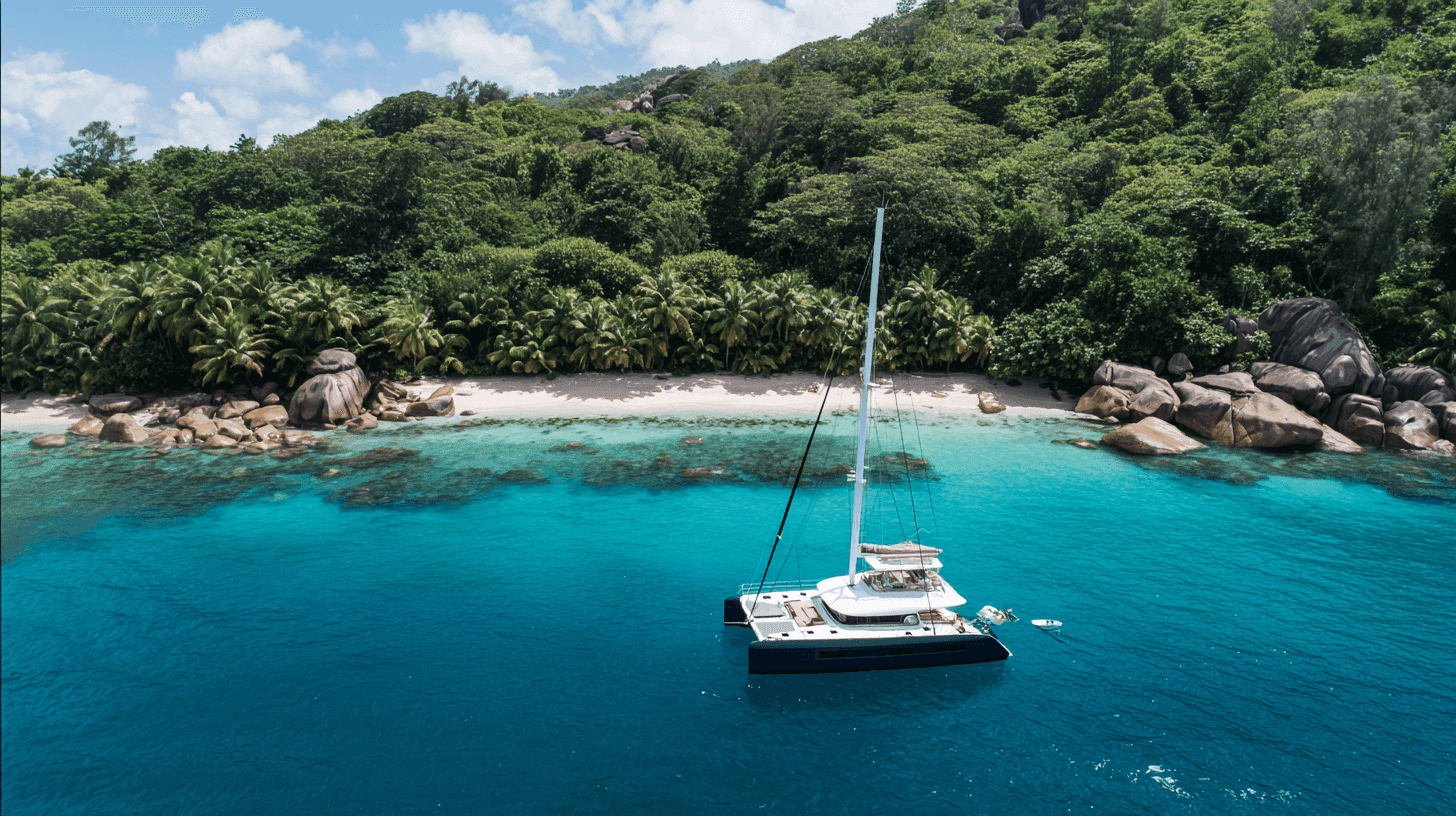
Hurricane Irma's path through the Caribbean in September 2017 destroyed or severely damaged a large number of yachts across the region, and it remains the clearest recent lesson in concentration risk for anyone whose capital sits in a single hull. Consider what that event means for an illustrative fractional group: eight investors, one catamaran, their entire position in the asset class tied to one vessel in one harbour. Insurance covers part of the loss but not the deductible, not the excluded items, and not the income foregone. The settlement process runs for years, during which the remaining capital cannot be redeployed. The group in this example is constructed rather than reported, but the sequence is what concentration actually costs when the tail event arrives.
Anatomy of Concentration Risk
The fundamental risk management failure in fractional yacht ownership stems from the concentration of significant investment capital in a single asset that can lose substantial value or be completely destroyed through events that are largely outside investor control. Unlike diversified investment portfolios that spread risk across multiple assets and asset classes, fractional yacht ownership creates 100% exposure to the performance, condition, and survival of a single vessel.
This single asset vulnerability manifests in multiple ways that can devastate investor returns. Mechanical failures, accident damage, regulatory changes, or market shifts that affect the specific yacht model can create substantial losses that cannot be offset by gains in other assets. The concentration risk is particularly severe because yachts are complex mechanical assets operating in harsh marine environments where catastrophic failures are always possible.
Consider a further illustrative composite: a 52-foot cruiser held by six investors. The engine suffers a catastrophic failure traceable to a manufacturing defect. The repair bill is large, and the vessel is out of service for months during the only part of the year that generates meaningful revenue. Repair cost and foregone income compound, and each owner absorbs a proportional share of both with nothing else in the position to offset it. The example is constructed, but it isolates the mechanism precisely: a single mechanical event in a single hull transmits directly to every euro the investor has committed.
The single asset vulnerability is compounded by the illiquid nature of yacht investments, which prevents investors from quickly adjusting their exposure when problems arise. Unlike publicly traded securities that can be sold immediately when adverse information emerges, yacht investments require extended marketing periods and often result in significant losses when forced sales become necessary.
Technological obsolescence presents another dimension of single asset vulnerability that can rapidly erode yacht values. The marine industry continuously evolves with new propulsion systems, navigation technology, and safety equipment that can make older vessels obsolete. Fractional owners who are concentrated in a single vessel bear the full impact of technological changes that reduce their yacht's competitiveness and value.
Technological obsolescence works the same way. Take an illustrative catamaran bought before hybrid propulsion and current-generation navigation electronics became standard expectations in the charter market. Within a few seasons the vessel is competing against newer tonnage that offers both, and it can only hold occupancy by discounting. Achievable charter rates fall while the fixed cost of ownership does not, and the fractional owners have no other asset in the position to offset the decline. Again the vessel is a constructed example, not a reported one.
Fractional yacht ownership typically concentrates investment risk not only in a single asset but also in a single geographic market, creating additional layers of concentration risk that can devastate returns when local conditions deteriorate. Most fractional arrangements involve vessels that operate primarily in a single cruising area, exposing all owners to the economic, regulatory, and environmental risks specific to that location.
Geographic concentration risk manifests in multiple ways that can create substantial losses for fractional yacht owners. Local economic downturns can reduce charter demand and pricing in specific markets, while regulatory changes can increase operating costs or restrict operations. Environmental events like hurricanes, earthquakes, or pollution incidents can damage vessels or make cruising areas temporarily or permanently unattractive to customers.
The Mediterranean yacht market provides a clear example of geographic concentration risk. Political instability in North Africa, economic crisis in Greece, and regulatory changes in France have all created periods of reduced demand and pricing pressure that affected all vessels operating in the region. Fractional owners concentrated in Mediterranean-based yachts bore the full impact of these regional challenges without any geographic diversification to offset local market weakness.
Geographic concentration compounds the problem. Picture an illustrative vessel based in a single Adriatic charter market. A change in operating regulations raises the cost base for every charter vessel in that jurisdiction, and a regional demand shock reduces bookings in the same season. Revenue falls and costs rise simultaneously, and owners with no exposure to any other cruising ground absorb the full effect. A fleet operating across several markets would have absorbed part of the same shock and continued trading elsewhere. The vessel here is illustrative; the exposure is not.
Currency risk represents another dimension of geographic concentration that can create additional losses for fractional yacht owners. Vessels operating in markets with different currencies than their owners' home currencies face exchange rate risk that can significantly impact returns. When local currencies weaken against owners' home currencies, charter revenues and asset values decline in home currency terms, creating losses that are unrelated to the vessel's operational performance.
Weather and natural disaster risk create perhaps the most severe form of geographic concentration risk, as demonstrated by the hurricane losses mentioned in the introduction. Fractional owners concentrated in hurricane-prone areas like the Caribbean or typhoon-prone areas like Southeast Asia face catastrophic risk that can result in total loss of their investment. While insurance provides some protection, coverage limits, deductibles, and exclusions often leave owners with substantial unrecoverable losses.
Fractional yacht ownership creates additional concentration risk through exposure to model-specific factors that can affect the performance, reliability, and value of specific yacht designs. When investors concentrate their capital in a single vessel of a specific make and model, they bear the full impact of any design flaws, manufacturing defects, or market perception changes that affect that particular yacht type.
Model-specific risk manifests in several ways that can create substantial losses for fractional yacht owners. Manufacturing defects that affect an entire production run can create expensive repair obligations and reduce resale values. Design flaws that become apparent over time can make specific models less desirable in the charter market or resale market. Changes in consumer preferences can reduce demand for specific yacht types or configurations.
Model-specific risk is the clearest illustration. Where a structural or systems problem emerges across a production run, every owner of that model faces the same repair obligation at the same time, and the model's reputation in the charter and resale markets suffers simultaneously. An owner holding a fraction of one hull of that model bears the full impact with nothing else in the position to offset it. A fleet holding several different designs absorbs the same event as a partial write-down rather than a total one.
Regulatory changes can also create model-specific risks when new safety or environmental regulations affect specific yacht designs differently. Vessels that cannot be economically upgraded to meet new requirements may face restricted operations or reduced values, creating losses for owners who are concentrated in affected models.
The evolution of charter market preferences creates ongoing model-specific risk as customer demands change over time. Yachts that were popular when fractional ownership groups formed may become less desirable as market preferences shift toward different sizes, configurations, or features. Fractional owners concentrated in specific models bear the full impact of these preference changes without diversification benefits.
Brand reputation risk represents another dimension of model-specific concentration that can affect yacht values and charter performance. When yacht manufacturers experience quality problems, financial difficulties, or reputation damage, all vessels from that manufacturer may suffer reduced values and charter demand. Fractional owners concentrated in specific brands bear the full impact of brand-related problems.
Market Volatility and Timing Risk
The yacht market, like most luxury asset markets, experiences significant cyclical volatility driven by economic conditions, consumer confidence, and wealth effects that can create substantial losses for investors who lack diversification across market cycles and asset classes. Fractional yacht ownership concentrates investment exposure to these market cycles without providing any diversification benefits to reduce volatility or protect against adverse timing.
Yacht market cycles typically correlate with broader economic cycles, with demand and pricing declining during economic downturns and recovering during periods of economic growth. However, yacht markets often experience more extreme volatility than broader markets because luxury spending is highly sensitive to wealth effects and consumer confidence. The 2008-2009 financial crisis produced steep declines in both brokerage values and achievable charter rates, and the recovery took years rather than quarters.
Fractional yacht owners who purchased shares during market peaks faced devastating losses during subsequent downturns, with no diversification benefits to offset the decline. Unlike investors in diversified portfolios who might experience losses in some asset classes while gaining in others, fractional yacht owners experienced the full impact of yacht market volatility without any offsetting gains.
The cyclical exposure is best understood through an illustrative composite. A group buys near the top of the pre-crisis market, six owners splitting a single 62-foot motor yacht. The crisis arrives, brokerage values fall sharply and charter demand thins out at the same time. Maintenance costs continue regardless. Any owner who needs to exit during that window is selling an illiquid minority interest in a depreciating asset into a market with almost no buyers, and realises a fraction of what they put in. The figures are omitted deliberately: the point is that the timing risk is borne entirely by whichever owner's circumstances force the sale, and no diversification within the structure exists to soften it.
Recovery from market downturns can take many years in yacht markets, creating extended periods of poor performance for fractional yacht owners. Unlike more liquid asset classes that can recover quickly when market conditions improve, yacht markets often experience prolonged recovery periods due to the illiquid nature of the assets and the time required to rebuild consumer confidence and charter demand.
The timing of fractional yacht investments becomes critical in cyclical markets, but individual investors have little ability to time their entry and exit effectively. Professional fleet operators can time acquisitions and dispositions more effectively by maintaining market expertise and flexible capital structures, but fractional ownership groups typically lack this capability and may be forced to buy or sell at unfavorable times due to group dynamics or individual financial needs.
Yacht investments are highly sensitive to interest rate changes, which affect both the cost of financing yacht purchases and the opportunity cost of capital invested in illiquid assets. Fractional yacht ownership concentrates exposure to interest rate risk without providing diversification benefits to offset the impact of rate changes on yacht values and investment returns.
Rising interest rates affect yacht investments in multiple ways that can create substantial losses for fractional yacht owners. Higher financing costs reduce the pool of potential yacht buyers, putting downward pressure on values. Higher opportunity costs make illiquid yacht investments less attractive compared to liquid alternatives, reducing demand and pricing. Higher charter financing costs can reduce charter demand as customers face higher costs for yacht vacations.
The case of fractional yacht investments made during the low interest rate environment of 2010-2015 illustrates interest rate sensitivity. As rates began rising in 2016-2018, yacht values came under pressure while charter demand softened due to higher financing costs. Fractional owners who had purchased shares during the low-rate period faced declining values and reduced charter income without any diversification benefits to offset the impact.
Financing risk represents another dimension of interest rate exposure that can affect fractional yacht owners. Many fractional ownership groups use financing to reduce individual capital requirements, but this leverage amplifies the impact of interest rate changes and market volatility. When yacht values decline or charter income falls, leveraged fractional ownership groups may face margin calls or forced sales that create additional losses.
The complexity of yacht financing also creates refinancing risk when loans mature and must be renewed. Changes in lending standards, interest rates, or yacht values can make refinancing difficult or expensive, forcing ownership groups to accept unfavorable terms or sell vessels at inopportune times.
Currency fluctuations add another layer of interest rate-related risk for fractional yacht owners, particularly when vessels operate in markets with different currencies than the owners' home currencies. Interest rate differentials between currencies can create exchange rate volatility that affects charter revenues and asset values in unpredictable ways.
Professional Diversification
Concentration is only half the problem. The other half is that the concentrated position cannot be trimmed. A holder of a listed equity who becomes uncomfortable with position size can sell part of it on any trading day. A fractional co-owner cannot sell part of a share, and to exit at all needs either a willing buyer in a market the Federal Trade Commission describes, in its closest analogue, as overcrowded and possibly impossible to sell into,1 or a partition action that takes one to two years and carries legal costs that may not be recoverable.2 Concentration risk that cannot be reduced on demand is a materially different exposure from concentration risk that can.
Professional fleet ownership addresses the concentration risk crisis of fractional ownership by providing comprehensive diversification across multiple vessels, markets, and operational structures that eliminate the single-asset vulnerability that makes fractional ownership unsuitable for sophisticated investors. Fleet operators implement sophisticated risk management strategies that spread investment risk across multiple assets while maintaining the potential for attractive returns.
The primary advantage of professional fleet ownership is the diversification across multiple vessels that eliminates single-asset concentration risk. Fleet operators maintain portfolios of vessels with different characteristics, operating in different markets, and serving different customer segments. This diversification ensures that problems affecting one vessel or market do not devastate the entire investment portfolio.
Geographic diversification represents another critical advantage of professional fleet ownership. Fleet operators maintain vessels in multiple cruising areas, reducing exposure to local economic, regulatory, and environmental risks. When conditions deteriorate in one market, vessels in other markets can continue generating returns, providing stability that fractional ownership cannot match.
Model diversification eliminates the model-specific risks that plague fractional ownership. Fleet operators maintain vessels from different manufacturers with different designs and configurations, ensuring that problems affecting specific yacht types or brands do not impact the entire portfolio. This diversification protects against manufacturing defects, design flaws, and changes in consumer preferences that can devastate single-model investments.
Market timing advantages represent another benefit of professional fleet ownership. Fleet operators can time acquisitions and dispositions more effectively than individual fractional owners by maintaining market expertise and flexible capital structures. Professional management can acquire vessels during market downturns when values are depressed and dispose of assets during market peaks when values are elevated.
Professional fleet operators also implement sophisticated risk management strategies that go beyond simple diversification. Fleet operators maintain comprehensive insurance programs, implement preventive maintenance schedules, and maintain reserve funds that protect against unexpected losses. These risk management strategies provide protection that individual fractional owners cannot achieve.
The economies of scale available to fleet operators enable them to implement diversification strategies that would be prohibitively expensive for individual fractional ownership groups. Fleet operators can spread the costs of professional management, insurance, and risk management across multiple vessels, making sophisticated risk management economically viable while delivering superior outcomes for investors.
For sophisticated investors considering yacht-related investments, the diversification advantages of professional fleet ownership over fractional arrangements are compelling. Fleet ownership provides the risk management, geographic diversification, and model diversification that eliminate the concentration risks that make fractional ownership unsuitable for prudent investment portfolios.
The evidence clearly demonstrates that fractional yacht ownership violates fundamental risk management principles by concentrating significant capital in single assets with exposure to multiple catastrophic risks. The concentration risk crisis in fractional ownership makes it unsuitable for sophisticated investors who understand modern portfolio theory and risk management principles.
Professional fleet ownership provides a superior alternative that eliminates the concentration risks of fractional ownership while delivering institutional-grade risk management, comprehensive diversification, and professional asset management. Fleet operators provide the expertise, scale, and risk management capabilities that yacht assets require to function effectively as diversified investments.
As the yacht investment market continues to evolve, the diversification advantages of professional fleet ownership over fractional arrangements will likely become even more pronounced. Investors who recognize these advantages early will position themselves to benefit from superior risk management while avoiding the concentration risks that make fractional ownership unsuitable for discerning investors who value portfolio diversification and risk management.
The concentration risk crisis documented in fractional yacht ownership serves as a cautionary tale about the importance of diversification in alternative investments. Sophisticated investors who understand modern portfolio theory and risk management principles will find professional fleet ownership offers compelling advantages over the concentration risks that characterize fractional yacht ownership.
Interested in yacht investments?
The concentration risk crisis in fractional yacht ownership represents a fundamental failure of risk management that violates every principle of prudent investment. Professional fleet ownership provides comprehensive diversification across multiple vessels, markets, and operational structures that eliminate the single-asset vulnerability that makes fractional ownership unsuitable for sophisticated investors who understand modern portfolio theory and risk management principles. For investors considering yacht-related investments, the choice between fractional ownership and professional fleet management represents a fundamental decision about risk management and portfolio diversification.
References
1 Federal Trade Commission. "Timeshares, Vacation Clubs, and Related Scams." Consumer Advice.
https://consumer.ftc.gov/articles/timeshares-vacation-clubs-and-related-scams
2 Keystone Law. "Partition Actions Explained: Forcing a Sale of a Jointly Owned Property." Legal guide.
https://keystone-law.com/guide-to-partition-actions